The first modern electronic digital computer, known as the Atanasoff–Berry Computer (ABC), was built in 1942 by John Vincent Atanasoff and his graduate student Clifford Berry at Iowa State University
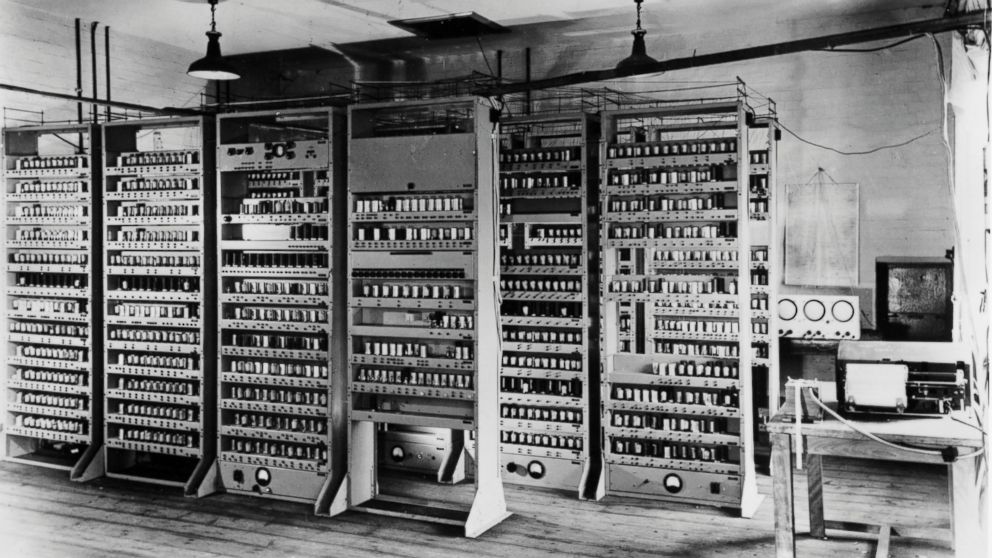
In 1947, the transistor was invented by John Bardeen, William Shockley, and Walter Brattain at Bell Labs. It replaced vacuum tubes, making computers smaller, faster, and more reliable. This invention marked the start of modern electronics and the digital age.

Second-generation computers, developed in the 1960s, used transistors instead of vacuum tubes, making them smaller, faster, and more energy-efficient. They supported high-level programming languages like FORTRAN and COBOL, which made them easier to program. These computers were more reliable and widely used in business, government, and scientific fields.
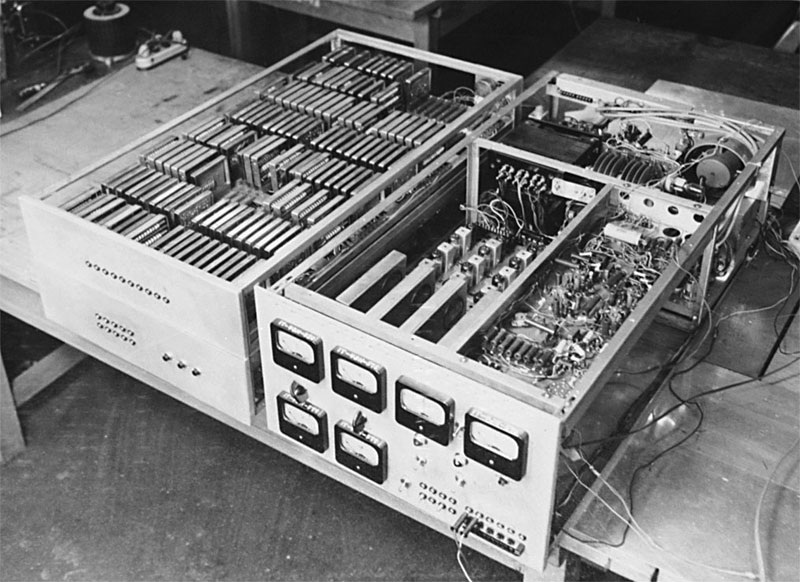
ARPANET was the first network to use packet switching and laid the foundation for the modern internet. Developed by the U.S. Department of Defense, it initially connected four universities and allowed researchers to share data remotely.
The Intel 4004 was the world’s first microprocessor—a complete CPU on a single chip. It marked a major breakthrough in computing, making it possible to build smaller and more affordable computers.
The Apple I, designed by Steve Wozniak and sold by Steve Jobs, was one of the first computers sold fully assembled. Though basic, it was a crucial step in making computers accessible to the public.
The Apple II was a powerful and user-friendly home computer featuring color graphics and expandability. It became one of the first successful mass-produced personal computers.
Apple released the Lisa, the first personal computer with a graphical user interface (GUI) and a mouse. Though expensive and not a commercial success, it introduced features that shaped future computers.
Microsoft launched Windows 1.0, its first GUI-based operating system. Though basic compared to later versions, it marked Microsoft's shift from command-line (MS-DOS) to graphical interfaces.
Larry Page and Sergey Brin founded Google, introducing a new search engine with better relevance and speed. Google quickly became the dominant tool for finding information online.
Apple released the iPod, changing the way people listened to music. With its sleek design and iTunes integration, it became a cultural icon and helped pave the way for Apple’s future devices.
Amazon launched Amazon Web Services (AWS), offering cloud storage and computing power online. This marked the start of large‑scale cloud computing, transforming how data and software are managed.
Intel and AMD popularized multicore CPUs, allowing computers to perform multiple tasks simultaneously. This dramatically improved speed and efficiency for both personal and enterprise computing.
Companies like IBM and Google began building early quantum computers, capable of performing complex calculations beyond classical computers. This started a new era in advanced computing research.
Supercomputers like Fugaku (Japan) and Summit (USA) reached unprecedented speeds, using artificial intelligence and cloud integration to handle massive data and scientific simulations.
From the invention of the first electronic digital computer in 1942 to today’s AI-powered supercomputers, the evolution of computing has been marked by innovation, miniaturization, and increased speed. Key breakthroughs like the transistor, microprocessor, personal computer, and cloud computing have transformed how we live, work, and communicate. What began as room-sized machines now fits into our pockets, and the journey continues with quantum and AI technologies shaping the future of computing.