Design Thinking Notebook · Stage 2 of 5
Define
Go through the interview notes and find the story the data is telling. Synthesize the patterns into clusters, name the core problem from the user's point of view, and turn it into opportunities to solve.
Initial Define Statement
Across all our interviews, the same patterns showed up: people act on autopilot — the decision to reach for their vice is already made before the moment arrives. They’re self-medicating something deeper (loneliness, sadness, financial strain, boredom), and chasing a dopamine fix and instant gratification. It’s about relief, not pleasure.
People stuck on autopilot reach for their vices to cope with deeper struggles like loneliness, stress, and boredom, so they need gentler ways to notice what they’re feeling and see other options in the moment.
Affinity Mapping
Five themes, one loop. Relief is brief, the crash from one feeds straight into the next — so the cycle keeps returning to the start.
The choice is made hours before the moment. “The deciding happened hours before — I was just waiting for permission” (Kai). Rodney: “once I get home I might do it.” Running on old beliefs, not choosing.
The vice treats a real problem underneath: loneliness (Rodney, Kai, Genovese), financial stress (Gerald, Ricardo), boredom, sadness, trauma. “Bad solutions to real problems” (forum). It’s relief, not pleasure — “chasing quiet.”
A fast hit to feel okay now. Ricardo: a “shortcut back to okay.” The forum named dopamine directly. Everyone wanted the feeling immediately, in the moment.
Loneliness underneath every story; people hide the extent out of shame (“you’re the only person who knows”). Relief is brief, then guilt — and the guilt becomes the next trigger.
Not to be lectured — to have other options and be reliable to the people they love. Strength comes from mattering to family. They want “permission to stop” without the vice attached.
POV Statement
Users on autopilot reach for vices to help cope with life, and they need other options.
“How Might We” Questions
create a beat of awareness before they reach?
encourage them to get in touch with their mind, body, and emotions?
encourage alternative options?
Persona Based on Findings
Meet the User: Felipe, the Fresh-Start Father
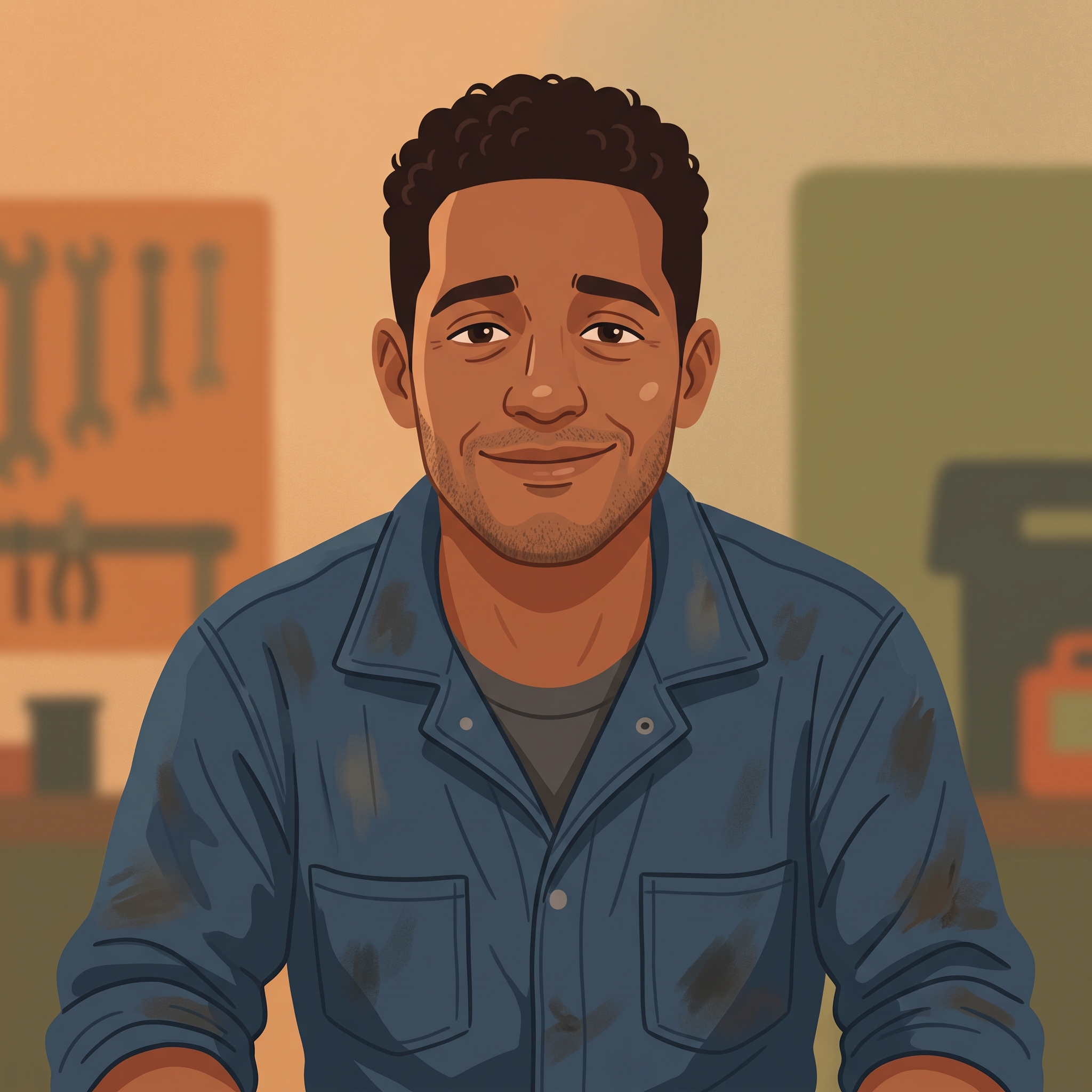
Mechanic & dad, making better choices.
Felipe, 27. Mechanic. Father of a 2-year-old. Struggles with heavy drinking.
Wants to be happy and make better choices. Wants to advance in his career. His biggest motivation is being a good example for his 2-year-old child.
Gets bored and is looking for things to do. Feels lonely. Carries unresolved trauma and depression. Financial strain makes it hard to take care of his family — he needs a healthy way to decompress.
“I find myself having destructive habits and I’m trying to make better choices.”